2. Materials and Methods
2.1. Research Design
This study employs a qualitative research design to gather data on the implementation of gender-responsive pedagogy (GRP) for teaching and learning in Ibadan, Oyo State. Two forms of qualitative data collection methods were utilized: Focus Group Discussions (FGDs) and Key Informant Interviews (KIIs).
Both methods were designed to explore the diverse perspectives of the several stakeholders involved in secondary education, including students, teachers, school administrators, and ministry officials.
2.2. Study Population and Sampling
The target population for this study includes secondary school teachers, school administrators, and Ministry of Education officials in Oyo State. Purposive sampling was employed to select participants who have direct experience with teaching and school management in relation to GRP. The participants were chosen based on their knowledge, roles, and involvement in education and gender issues within the state.
2.3. Data Collection Methods
Data for this study were collected through semi-structured interviews conducted with key stakeholders. An interview guide was developed based on the study’s objectives, ensuring that questions addressed various aspects of GRP implementation, barriers and facilitators, the perceived significance of GRP practices for students, and potential strategies for improving GRP integration in schools.
Each interview lasted between 25 minutes to 45 minutes, providing enough time for participants to express their views comprehensively. Interviews were audio-recorded, with the consent of the participants, and later transcribed for analysis.
2.4. Focus Group Discussions (FGDs)
Two FGDs were conducted with secondary school students to explore their experiences and perceptions of gender-responsive teaching and learning practices in their schools. Each FGD was composed of a mix of male and female students to encourage a balanced discussion on how GRP affects their classroom interactions and overall learning experience. The first FGD comprised eight students, while the second included seven students, giving a total of 15 student participants.
The FGDs allowed students to share their experiences and reflect on whether they felt that teachers treated boys and girls equally in terms of participation, access to resources, and support for learning.
2.5. Key Informant Interviews (KIIs)
A total of 10 KIIs were conducted with stakeholders who play a critical role in the implementation and oversight of GRP in schools within Ibadan. The key informants included:
(1) The Honorable Commissioner for Education
(2) The Director of Quality Assurance
(3) The Director of Schools
(4) One School Counsellor
(5) One School Principal
(6) Five Secondary School Teachers
2.6. Data Analysis
Data from both the FGDs and KIIs were transcribed verbatim and analyzed using thematic analysis. The analysis was conducted using Atlas.ti, a qualitative data analysis software that enabled the systematic coding of responses and identification of key themes. The data were analyzed in alignment with the four objectives of the study:
(1) To assess how secondary school teachers implement GRP in their teaching processes in Oyo State.
(2) To explore the barriers and facilitators associated with mainstreaming gender-responsive pedagogy in Oyo State.
(3) To recommend possible strategies for schools to incorporate GRP activities into learning and teaching.
(4) To ascertain the perceived significance of the integration of GRP practices for students.
Each theme was developed by grouping similar responses and identifying patterns across the interviews and focus group discussions. The software helped ensure that the data were systematically organized, so as to ensure a more efficient thematic analysis and interpretation of the results.
To ensure the reliability of the findings, a process of coding was used, where similar responses were grouped into categories to reveal common trends or divergent views among the stakeholders. The findings were then interpreted in relation to the study’s objectives, with recommendations proposed based on the data gathered.
2.7. Ethical Considerations
This study was conducted following the ethical principles of the National Association of Social Workers (NASW)
| [15] | Cnossen CJ, Pearce EB. National Association of Social Workers Code of Ethics. Introduction to Human Services. 2020. |
[15]
. Ethical approval was obtained from the Oyo State Ministry of Education before data collection. Before conducting the interview, all participants were fully informed using information sheets outlining the study’s scope and objectives which were duly explained to the participants in English as necessary. Anonymity and confidentiality were assured for all participants who provided informed consent, with their data being stored securely. Participation was voluntary, and students and key informants were made aware that they could withdraw from the study at any point without facing any consequences. Additionally, students below 18 years of age provided informed consent using assent forms from their guardians.
3. Results
This section presents the results of gathered data on gender-responsive pedagogy for teaching and learning. Two forms of interviews were conducted; Focus Group Discussions (FGD) and Key Informant Interviews (KII). Two FGDs comprising eight and seven students were conducted, while Ten KIIs were conducted, comprising the Honorable Commissioner for Education, the director of Quality Assurance, Director of Schools, School Counsellors and six teachers.
Four objectives were thematically analysed using Atlas.ti.
3.1. Assessing How Secondary School Teachers Implement GRP in Their Teaching Processes in Oyo State
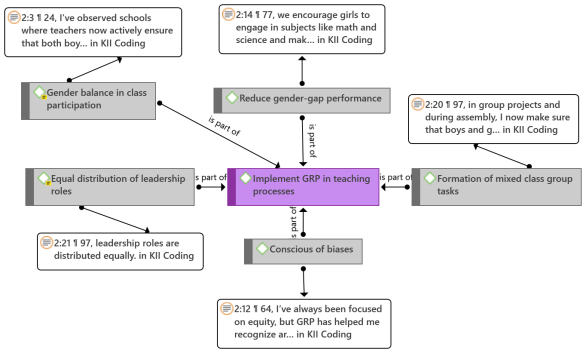
This section presents a thematic analysis of the the ways by which teachers and other stakeholders such as the director of schools, director of quality assurance and school counsellors. Each of these stakeholders was interviewed to elicit responses on how they have been able to implement GRP in teaching and learning processes. From the responses gathered from the nine participants, five themes were identified, as presented in
Figure 2; Gender balance in-class participation, reduced gender gap performance, equal distribution of leadership roles, formation of mixed class group tasks and consciousness of biases.
Figure 2. Implementation of GRP in teaching processes.
3.1.1. Gender Balance in Class Participation
One of the ways by which teachers specifically were able to implement GRP in their teaching processes was to ensure gender balance in-class participation. Some of the teachers indicated making a conscious effort to ensure that male and female students participated equally during discussions or while teaching. Sample excerpts below;
“I now ensure that I’m giving equal attention to both boys and girls and that I encourage them to participate in activities they might run away and avoid from” (KII/Principal/Male).
“I’m making sure that girls are equally represented in my chemistry class practical and group work” (KII/Science Teacher/Female).
From the above excerpt, it is deduced to effectively implement GRP in the teaching processes, teachers encourage students to partake in all activities that are inclusive of those perceived to be meant for a particular gender. For instance, it was identified from the response of one of the teachers that Chemistry is perceived to be the stronghold of the male gender, especially during practical sessions, hence, ensuring that female students were included during the practical periods. This forms one of the core principles of GRP, which is ensuring gender balance in the learning process.
Taking the gender balance a little bit further, involvement in menial activities such as maintaining the cleanliness of the environment, which was originally and socially described as the roles and responsibilities of the female gender was also inculcated. As indicated by the principal, he also ensures that the male students participate in the chores in school and within the classrooms: [Principal: “especially when we tell them to sweep the class and encouraged to take on roles or activities considered girls work, but over time, they’ve adjusted because we make it compulsory”]. Although this may not be directly linked with pedagogy, it is identified to play a role in further ensuring gender balance in-class activities.
3.1.2. Reduction in Gender Gap Performance
Another identified way by which teachers implement GRP in their teaching process is the conscious reduction in the performance of males and females across all subjects they are being taught. While it was observed from the responses of some of the teachers who initially also held biases regarding male and female-dominated subjects, their awareness of GRP made them more conscious of the performance gap, which this has created between the two genders, hence, made a conscious effort to reduce the gap in the performance of the students across all subjects, including the perceived male and female strongholds. Sample excerpt below;
“we encourage girls to engage in subjects like Math and science and make sure that boys are not left behind in subjects traditionally seen as female subjects. It’s relevant because it helps create a more inclusive learning environment, which improves overall student performance helps to reduce the performance gap between male and female students…” (KII/Principal/Male).
From the above excerpt, it is deduced that there are acknowledged male and female ‘subjects’, which is against the principles of GRP. Therefore, the Principal by proxy encourages both genders to engage more in their weakest subject due to gender, to record overall performance. While females were encouraged more to participate in Mathematics and other Science-based subjects, males were also encouraged to participate more in female ‘subjects’, which includes the English language, amongst others. This will help reduce the gap in performance across all the subjects and subsequently fulfil one of the principles of GRP.
3.1.3. Equal Distribution of Leadership Roles
Another way by which teachers can implement GRP in their teaching process is to equally distribute leadership roles between male and female genders in class activities. This was one of the ways by which teachers have been able to identify why one gender has been docile, while the other has been active in class participation. It was observed that giving leadership roles equally to gender would spur the equal participation and activeness of both genders in-class activities. Sample excerpts below;
“...and that leadership roles are distributed equally…” (KII/Principal/Male).
“...We’ve done programs where girls are encouraged to take on leadership roles in school which has been very successful in boosting their confidence and engagement…” (KII/Director of Schools/Male).
From the above excerpts, leadership roles were ensured to be equally distributed and affirmed by the Director of schools to yield a successful result thereby boosting the confidence and engagement levels of the female gender. This is one aspect that the society and culture have contributed less to, given the patriarchal system that is still common in Oyo state. This therefore links to some of the principles of GRP, which was encouraging female leadership to further inspire the other female gender of their capabilities and that they are not too different from their male counterpart.
3.1.4. Formation of Mixed Groups in Class Tasks
Further to encouraging female leadership, teachers also take the initiative to form groups with different tasks, comprising both males and females. This was identified as one of the ways by which GRP was implemented. Practically, one of the teachers organised a debate on the better gender between the male and female children, each side comprising a mix of the genders. This leaves some of the debaters to argue for their opposite gender. This was deliberately done to encourage interaction and seeing from the lens of the opposite gender. This further gave insight into the equality in ability and capabilities of both males and female:
“There is a debate that says “The male child is better than the female child”, but when we had ours I didn't make only girls support the female gender and only boys support the male gender, I mixed them up, to give room for opposite genders to support each others motion, and it turned out very interactive, and they performed better.” (KII/Accounting Teacher/Male).
“...In group projects and during assembly, I now make sure that boys and girls work together …” (KII/Principal/Male).
As observed from the excerpt above, both genders are sometimes grouped to work together in the completion of assigned projects. This was to further enlighten both genders of their uniqueness in contributing to the success of a group, and that no gender is unique. This also boosts the confidence of both genders equally. This further promotes some principles of GRP, which helps achieve equal opportunity to learn and develop between male and female gender.
3.1.5. Conscious of Biases
Some stakeholders (Directors or schools and Principals) admitted to having biases regarding how they approach and teach their students. For instance, one of the teachers admitted that before knowing GRP, the students were taught the same way, however, after deep reflection following their GRP knowledge, they identified the need to support male and female students in specific subjects. This is to ensure fairness in teaching and learning. Sample excerpts below;
“Yes, as a male response, I’ve had to reflect on my own biases and ensure that they don’t influence my decisions…I must remain objective and ensure that my focus is on promoting policies that provide equal opportunities for all students, without letting personal assumptions influence the evaluations” (KII/Director of Schools/Male).
“more aware of the biases that can come up in the classroom” (KII/Principal/Male).
From the above excerpts, it is deduced that stakeholders are more careful to avoid gender-based biases when addressing students in order not to deny them an equal chance of learning.
3.2. Barriers Associated with Mainstreaming Gender Responsive Pedagogy in Oyo State
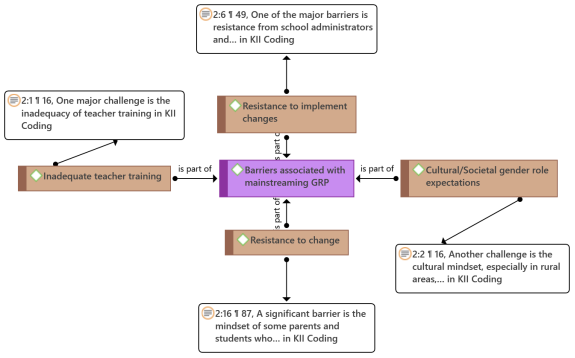
The second objective of the study assess the barriers associated with mainstreaming GRP in Oyo state. Four barriers were identified from the gathered data as affecting mainstreaming GRP in Oyo state. These are; Inadequate training, resistance to implement changes, cultural/societal gender role expectations and resistance to change (
Figure 3).
Figure 3. Barriers associated with mainstreaming GRP.
3.2.1. Inadequate Training
One of the barriers associated with mainstreaming GRP in Oyo state is inadequate training of teachers in the implementation of GRP. According to the Director of quality assurance, it was observed that although GRP is not a new program, there is no adequate training for teachers to fully implement in in the teaching process. Sample excerpt below;
“One major challenge is the inadequacy of teacher training. You know that not everyone is open minded.” (KII/Director, Quality Assurance/Male).
“insufficient training for school leaders on how to implement GRP effectively” (KII/Director of Schools/Male).
“Another challenge is the lack of adequate training and resources for teachers to fully understand how to implement it” (KII/Principal/Male).
From the above excerpt, it is deduced that providing insufficient training for teachers made it difficult to fully implement GRP. This is also associated with the lack of adequate resources, needed to train the teachers on the appropriate implementation of GRP [(KII/Social Studies Teacher/Female) “Another thing is the lack of learning materials (textbooks)”]. The director of quality assurance also affirmed the scarcity of relevant training materials that aid GRP implementations: [“There’s also a lack of gender-sensitive teaching materials”]. The scarcity of training materials makes it difficult to adequately train the teachers, which subsequently makes it difficult to mainstream GRP in Oyo state.
3.2.2. Resistance to Change and Cultural/Societal Gender Role Expectations
Another barrier to change in this study is resistance to adopting GRP as part of the teaching process in schools. It was observed that despite the encouragement and order from appropriate quarters regarding the implementation of GRP in schools, the director of quality assurance indicated that some schools resisted its implementation. Sample excerpt below;
“...resistance from school administrators and teachers who may not see the value in changing their current practices…” (KII/Director of Schools/Male).
From the excerpt, schools were reported to not see the value in its implementation, which might also be attributed to the insufficient exposure of school leaders to the benefits of GRP implementation. This further makes it difficult to mainstream GRP, given the fact that it needs the cooperation of school managers and operators to ensure its effectiveness.
Apart from the resistance from the school, parents and students’ inflexibility to change their attitude towards providing equal opportunities to gender was identified as another barrier to GRP implementation. The mindset of the parents especially due to the patriarchal society in Oyo state presents a challenge to convince them of the possibilities of the female gender to also be able to perform some male roles, including making decisions on the choice of course to study in schools. Sample excerpts below;
“A significant barrier is the mindset of some parents and students who are resistant to change. They often think that it is complicated” (KII/Principal/Male).
“...To even change the traditional attitudes among students themselves is not easy because that is what they do from home…” (KII/Science Teacher/Female).
“...societal expectations, where students come into school with ideas about gender roles that they have learnt from home or their neighbourhood…” (KII/School Counsellor/Female).
3.3. Strategies for Schools to Incorporate GRP Activities into Learning
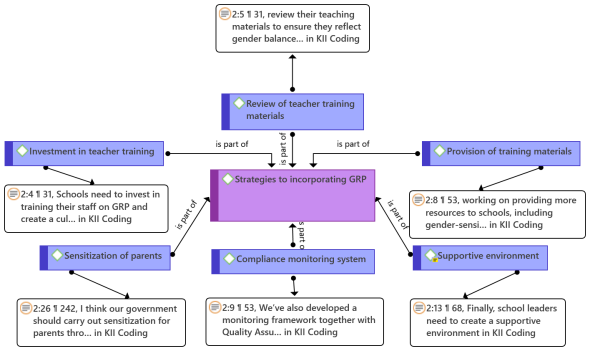
Figure 4. Strategies to incorporating GRP.
Series of strategies were identified from the study on how GRP activities can be incorporated into learning in schools. These includes; Investment in teacher training, review of teacher training materials, provision of training materials, sensitization of parents on the importance of GRP, instituting compliance monitoring system and providing a supportive environment (
Figure 4).
One of the identified barriers to mainstreaming GRP in Oyo state was the lack of adequate training of teachers. This therefore informed the proposed strategy to invest in the training of teachers on the importance of GRP and how it can be incorporated. The director of quality assurance indicated that “Schools need to invest in training their staff on GRP” (KII/Director, Quality Assurance/Male). Investment in training will further increase the reach of the teachers and schools where GRP can be mainstreamed. This also aligns with another identified strategy, which is the provision of training materials to aid effective training.
Another identified strategy from the gathered data is the need to review the teacher’s training materials. The director of quality assurance also indicated in his response the need to“..review their teaching materials to ensure they reflect gender balance and avoid reinforcing stereotypes” (KII/Director, Quality Assurance/Male). The review was specifically indicated to include content that promotes gender balance and does not further promote stereotyping and division of gender roles, especially in learning. This also comes with providing a supportive environment.
To cater for the resistance of parents to gender role expectations, it was recommended from the gathered data that they should be sensitised on the new event(s) which promotes equality in learning for both male and female students. Sample excerpt below;
“I think our government should carry out sensitization for parents through media platforms (radio, TV), so that even if it's a male or female child they should be willing and interested to learn and achieve success at the end of the day” (KII/Accounting Teacher/Male).
The sensitization, in order to get a wider reach was advised to be made on media platforms such as radio and Television. This will make the mainstreaming easier for concerned agencies and teachers.
Finally, it was recommended from the gathered data that concerned agencies should institute a monitoring team that ensures the proper implementation of GRPs. This is to force schools to fully implement. Sample excerpt below;
“...developed a monitoring framework together with Quality Assurance department to ensure that schools are implementing GRP as part of their broader gender equity efforts…” (KII/Director, Quality Assurance/Male).
3.4. Perceived Significance of the Integration of GRP Practices for Students
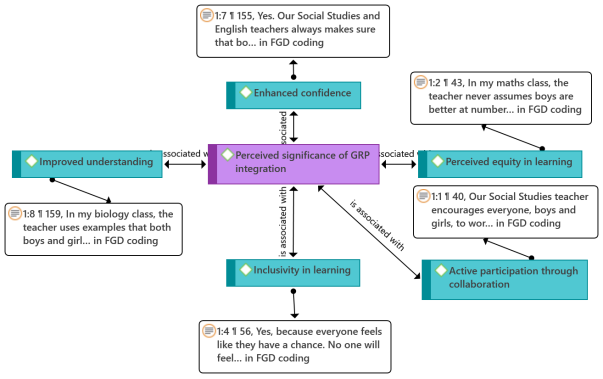
Figure 5. Perceived significance of GRP integration.
Another objective of the study was to identify the perceived significance of the integration of GRP practices for students learning. Some of the students identified from their responses that certain practices by teachers tend to align certain subjects or classroom activities to a specific gender. For example, participant 4 in FGD group 1 stated that: [In our chemistry class, the teacher always picks boys to do experiments. He says things like, ‘Boys are better with these kinds of things], and Participant 5 in FGD 2 stated that [In our home economics class, it’s always assumed that girls should be better at cooking and sewing, but when boys want to participate, some teachers say girls can do it better]. These acts were viewed by students to be a discouraging practice that further increases the gender gap in learning. This is because it is perceived to be determined by gender stereotypes, which is a carryover from what society has defined for each gender.
However, it is important to note that some perceived significance was identified if GRP is properly integrated into students learning. The identified themes, as shown in
Figure 5 are; Enhanced confidence, improved understanding, perceived equity in learning inclusivity in learning and active participation through collaboration.
3.4.1. Enhanced Confidence
One of the perceived significance of GRP integration is the increased confidence that students gets for participating in class activities. It was observed from the gathered data that when teachers introduce topics and terms in such a way that generates debates in class, it encourages students to partake in the debate, and subsequently increases their confidence. Sample excerpt below;
“Our Social Studies and English teachers always makes sure that both boys and girls contribute during debates. It’s helped me feel more confident” (Participant 1/FGD2/Female/SSS 1).
From the excerpt above, it could be deduced teachers role in facilitating GRP integration cannot be overemphasised to increase the confidence of the students. This especially is found to be effective when the teacher consciously ensures that there is a balance in gender perspectives and submissions during class discussions and debates. As identified from the excerpt, the student affirmed that such acts by the teacher makes her feel confident. In an ordinary situation where the teacher do not encourage perspectives and submissions from both genders. Another student stated that:
”In my maths class, the teacher never assumes boys are better at numbers. He makes us solve the questions on the board, and if a girl gets it right, she praises her the same way she praises the boys” (Participant 5/FGD1/Female/SSS 3).
The above excerpt further buttress how teachers’ activities and approach in directly or indirectly utilising GRP increases the confidence of the students in learning in class. As could be deduced from the excerpt, the fact that the teacher did not stereotype any gender in learning Mathematics as well as equal reinforcement of correct answers from each gender was enough to further increase the confidence of both gender to further participate in class activities.
3.4.2. Improved Understanding
Another identified significance of GRP integration for students is the improvement in students understanding of concepts in class. From the understanding of the students, GRP integration in learning enables them to better understand concepts and topics taught in class. Sample excerpt below;
“In my biology class [For instance], the teacher uses examples that both boys and girls can relate to. It makes the subject more interesting because we all understand it better” (Participant 6/FGD 2/Female/SSS 1).
From the above excerpt, it was observed that the use of GRP by teachers ensured that the students were able to relate with what was being taught, given the nature of the terms and concepts in Biology. In addition, students found it to be more interesting as the use of gender bodily features (Male and female), which is also the composition of the classroom were readily available and feasible around them. This made it easier for students to relate with the teachings and further improved their understanding of the concepts being taught.
3.4.3. Perceived Equity in Learning
Through integration of GRP, students also perceived that there is likely to be equity in learning. As it was identified in the introductory part of this sub-section, students showed concerned of certain gender discrimination especially in the learning of some subjects such as Home Economics and Chemistry to mention a few. However, if GRP is adequately integrated, it was observed to provide equal learning opportunities for both genders. Sample excerpt below;
“It will make the classroom more balanced. No one will think, ‘This is only for boys’ or ‘This is only for girls.” (Participant 7/FGD 1/Female/SSS 1).
As could be described as giving every students equal chance of learning, the excerpt above anticipates that integrating GRP in teaching offers the opportunity for both gender to learn and understand, and not left wandering because of their gender. Again from the introductory part of this section, all students, regardless of their gender will have the opportunity to learning and understanding Chemistry and Home Economics if GRP is integrated into the teaching system.
3.4.4. Inclusivity in Learning
Another perceived significance of GRP integration into learning for students is the inclusivity it offers for the students. Inclusivity in this regard was observed from students’ submission of the kind of balanced and fair learning environment that GRP presents, More specifically, it was observed that GRP integration will offer the opportunity for every individual to partake in classroom activities, especially in learning. Sample excerpts below;
“Yes, because everyone feels like they have a chance. No one will feel shy to participate if they know they won’t be judged” (Participant 6/FGD 1/Female/SSS 1).
“...teachers always makes sure that both boys and girls contribute during debates…” (Participant 5/FGD 2/Female/SSS 1).
From the above excerpt, it could be deduced that having a GRP integrated system in secondary school will make students, regardless of their gender to develop the sense of being included or part of a learning team/environment, which is not based on their gender. Particularly adopting an approach that ensures that both gender partake in classroom activities further spurs the perceived inclusiveness in the learning process for students.
A similar theme to inclusivity in learning is the active participation of students in learning. Although active participation through collaboration was identified as another theme, it shares some features with inclusivity in learning. It was observed from the gathered data that students perceives from subtle observation of their school environment especially during learning period, they were actively involved when they are divided into groups that has the mix of both gender. Sample excerpt below;
“Our Social Studies teacher encourages everyone, boys and girls, to work in mixed groups. He says, ‘Both of you have something valuable to contribute.’ I think it helps because we get to learn from each other, and no one feels left out” (Participant 4/FGD 1/Female/SSS 2).
From the excerpt, students believed that they all have different parts to play during group tasks in schools, hence, takes it as individual responsibilities to ensure that the group is active by contributing their part to it. While dividing into groups serves its own purpose of ensuring that individual group members are active, the gender mixture also implies that the contribution of both male and female gender are mutually exclusive in academic exercises, especially when grouped.
Another student also indicated that the approach which one of the teachers adopts depicts a GRP integrated method, which also benefits students learning: [Participant 7/FGD 2/Male/SSS 2: “In my Civic Education class, our teacher encourages both boys and girls to lead discussions. She says it’s important for everyone to get a chance”]. From the excerpt, making both genders leads discussions ensures active participation and inclusivity at the same time. This ultimately contributes to reducing the gap in learning for both genders, if adopted across different subject areas.
5. Recommendations
The following recommendations were made based on the findings of the study;
i. Firstly, it is recommended that concerned agencies such as the Oyo State Ministry of Education, the Teaching Service Commission, and the state Universal Basic Education Board should include in their recruitment exercise, the flexibility of potential teachers to inculcate GRP while teaching. This could also be added as part of the recruitment criteria. This will assist in recruiting teachers with the needed skills that are desired in mainstreaming the new changes in education, including GRP.
ii. As regards the currently serving teachers, it is recommended that the state government should make it a point of duty to invest in staff development for some time. For instance, the state government could create training and development opportunities in batches, where the first sets of teachers can be trained on GRP. These sets of teachers will in turn serve as trainers for other teachers within their respective schools. This will not only be economically viable but also aid fast implementation in schools.
iii. Further, it is recommended that the Oyo state government through the concerned agencies should attach a motivational package to the utilisation of GRP by teachers. For instance, teachers who can utilise the training on GRP can be rewarded with recognition or materially to encourage other late adopters amongst them.
iv. It is also recommended that the government should subscribe to media platforms such as radio and television through the sponsoring of educational programs to generate more listenership of parents and guardians. The essence is to deploy messages on the meaning, importance and reason why every stakeholder should adopt GRP as part of the teaching processes in schools. This will help get a wider reach. Periodic events held in schools such as Parent-Teachers Association (PTA) meetings can also be leveraged as an opportunity to pass similar messages.
v. In addition, it is recommended that the Oyo State Ministry of Education, Teaching Service Commission, and state Universal Basic Education Board institute a compliance team that will ensure that schools adhere strictly to GRP implementation principles. Penalties should be instituted and made known to every school within the state in order to command implementation.
All the above recommendations were made, considering the importance of GRP as observed and found in this study.
Implications
The findings of this study have several important implications for policy and practice in the education sector, particularly in Oyo State, Nigeria:
Need for Targeted Teacher Training: The study reveals that inadequate teacher training is a significant barrier to the effective implementation of Gender-Responsive Pedagogy (GRP). Therefore, there is an urgent need for continuous and comprehensive professional development programs for educators. Teachers must be equipped with the necessary skills and knowledge to implement GRP strategies effectively in the classroom. This training should be part of a broader professional development framework that includes gender-sensitive teaching practices as a key component of teacher education.
Awareness Campaigns for GRP: Resistance to GRP in some schools, driven by limited understanding of its benefits, suggests the necessity of robust awareness campaigns. Educational stakeholders, including school administrators, teachers, and students, need to be better informed about the positive impact of GRP on promoting fairness and inclusivity in education. Raising awareness through workshops, seminars, and other educational programs can help address misconceptions and foster broader acceptance of GRP.
Policy Integration of GRP: To mainstream GRP effectively, there is a need for clear policy integration at the state and national levels. The incorporation of GRP into educational curricula and national education policies would provide clear guidelines and institutional support for teachers. This integration should also include gender-responsive materials and resources to enhance the quality of instruction and promote gender equity in schools.
Resource Allocation for GRP Implementation: The study highlights the lack of resources, which limits the effective application of GRP in schools. It is essential for policymakers to allocate adequate funding and resources to support the implementation of GRP. This includes providing schools with the necessary instructional materials, teaching aids, and technology to ensure that GRP strategies are effectively incorporated into daily teaching practices.
Fostering Inclusive Learning Environments: The positive impact of GRP on student engagement and achievement underscores the importance of creating inclusive learning environments. Schools must ensure that both male and female students have equal opportunities for participation, access to resources, and academic success. This can be achieved by fostering a classroom culture that promotes respect for gender equality and addresses the unique needs of both genders.
Implications for Broader Educational Equity: The findings from this study contribute to the broader discourse on educational equity in Nigeria. The challenges and opportunities identified in Oyo State are not unique to this region, and the insights gained can be applied in other states facing similar barriers to GRP implementation. By addressing the barriers identified in this study, the education system as a whole can move towards more equitable educational outcomes.





 Share This Article
 Twitter
 Linked In
 Facebook
 Copy
Copy Download